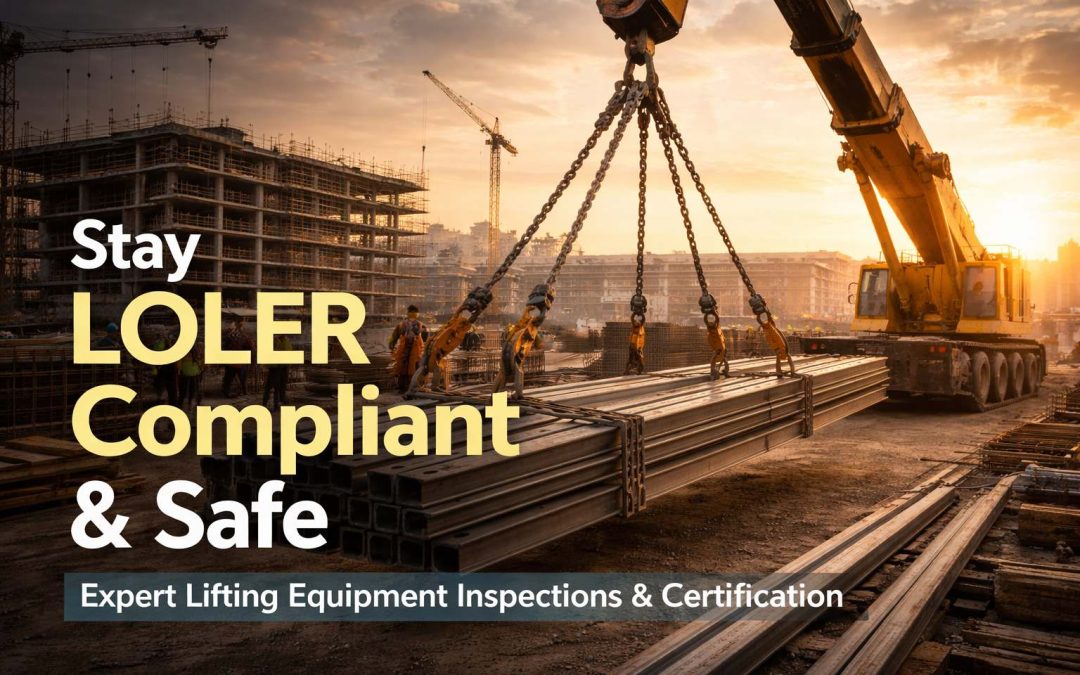
The Compliance Gap That Could Cost You Everything
Most businesses think they’re covered. They’ve got the equipment, they’ve got staff trained to use it, and somewhere in a filing cabinet there’s a certificate from a couple of years back. Job done. Right?
Not quite.
LOLER compliance in the UK is one of those areas where the gap between thinking you’re sorted and actually being sorted is wider than most people realise. And the consequences of getting it wrong — a serious workplace injury, an HSE investigation, a prosecution, an insurance claim that doesn’t pay out — are serious enough that it’s worth understanding properly.
At Lincs Lifting, we work with businesses across the UK every day on exactly this: making sure their lifting equipment is inspected, certified, and genuinely fit for purpose. Not just on paper. In practice.
So let’s go through what LOLER actually requires, what it means for your operation, and why getting the right partner for inspections and equipment supply makes more difference than you might expect.
What Is LOLER — And Why Does It Actually Matter?
LOLER stands for the Lifting Operations and Lifting Equipment Regulations 1998. It applies to virtually any business that uses lifting equipment as part of its work — and the scope is broader than many people assume.
We’re talking cranes, hoists, forklifts, vehicle tail lifts, lifting accessories, chain slings, steel wire ropes, shackles, eyebolts — if it lifts a load, LOLER almost certainly applies to it.
The regulation requires that all lifting equipment is:
- Sufficiently strong and stable for its intended use
- Clearly marked with safe working loads
- Positioned and installed to minimise risk
- Thoroughly examined at regular, specified intervals by a competent person
- Accompanied by a written report following each examination
That last point — the thorough examination — is where a lot of businesses come unstuck. A visual check by a supervisor isn’t sufficient. A certificate that’s eighteen months old on equipment that should be inspected every six months isn’t sufficient. And “competent person” has a specific meaning under LOLER that doesn’t simply mean someone who’s been around lifting gear for a while.
How Often Does Lifting Equipment Need a LOLER Inspection?
Here’s where it gets slightly more nuanced — and where getting proper advice rather than guessing really pays off.
The required frequency of thorough examinations under LOLER depends on the type of equipment and how it’s being used:
Every 6 Months
- Lifting equipment used to lift people
- Lifting accessories (chain slings, wire rope slings, shackles, hooks, and similar)
Every 12 Months
- All other lifting equipment not used for lifting people
Following Exceptional Circumstances
Any lifting equipment that has been involved in a significant incident, has been out of service for a prolonged period, or has undergone substantial modification should be examined before being returned to use — regardless of when its last scheduled inspection was.
Let’s be honest: a lot of businesses set a reminder for the annual inspection and consider themselves done. But if your chain slings and lifting accessories are working hard every day on a busy construction site or in a warehouse environment, that six-month examination isn’t optional — it’s a legal requirement.
LOLER and Lifting Accessories: The Most Commonly Overlooked Area
If there’s one part of LOLER compliance that consistently catches businesses out, it’s lifting accessories. Not the big, obvious equipment — the crane, the forklift, the hoist — but the slings, the chains, the ropes, and the rigging hardware that connects loads to lifting machinery.
These items work hard. They’re subjected to repeated loading, potential shock loads, abrasion, chemical exposure, and the kind of daily wear that adds up quickly. A chain sling that looks fine to an untrained eye can have fatigue cracks, corrosion, or deformation that makes it genuinely dangerous under load.
Chain Slings
Chain slings are workhorses. Robust, durable, and versatile — they’re used across construction, manufacturing, engineering, and heavy industry throughout the UK. But they’re not indestructible. Regular thorough examination by a competent person isn’t bureaucratic box-ticking; it’s how you catch problems before they become incidents.
As a specialist chain slings supplier, Lincs Lifting not only supplies grade 8 and grade 10 chain slings across the UK, but provides the testing, certification, and ongoing examination schedule to keep them compliant throughout their working life.
Steel Wire Rope
Steel wire rope is another area where expertise matters enormously. The deterioration mechanisms for wire rope — broken wires, corrosion, kinking, crushing, reduction in diameter — require a trained eye to identify reliably. As an experienced steel wire rope supplier, we work with clients across a wide range of industries to supply, inspect, and certify wire rope assemblies to the relevant British and European standards.
Lifting Equipment Testing and Certification: What the Process Looks Like
For businesses going through the process for the first time — or switching to a new provider — it helps to understand what a proper LOLER thorough examination actually involves.
It isn’t a quick look-over. A competent examiner will:
Review the equipment’s history — previous examination reports, any incidents or near misses, modifications, and maintenance records.
Conduct a detailed physical examination — checking for visible damage, wear, deformation, corrosion, and any signs of misuse or overloading.
Test functionality — where appropriate, this includes functional testing under load to verify that safety-critical components are performing correctly.
Produce a written report — detailing the condition of the equipment, any defects identified, recommended remedial actions, and the date by which the next examination is due.
If defects are found that pose an immediate danger, the examiner is legally required to notify the relevant enforcing authority — typically the HSE. This isn’t a threat; it’s the system working as intended. And it’s why thorough, honest examinations by genuinely competent inspectors are so important.
Load Restraint: The Overlooked Cousin of Lifting Compliance
Here’s something that often gets treated as a separate conversation but is very much part of the same picture: load restraint.
Whether you’re securing loads on vehicles for transport or restraining materials and equipment in a warehouse or on a construction site, the principles — and the legal obligations — overlap significantly with lifting safety. Failure to properly restrain loads has caused fatal accidents across the UK. The risks are very real.
Lincs Lifting supplies a comprehensive range of load restraint equipment — lashing straps, ratchet straps, load bars, edge protectors, and related hardware — and our team can advise on correct specification for the loads and vehicles involved. Getting the right equipment and using it correctly aren’t the same thing, and we make sure our customers understand both.
Why Choose Lincs Lifting?
We’re specialists. Not a generalist safety consultancy that also happens to do lifting, not a hire company with inspection as an add-on. Lifting equipment — its supply, testing, certification, and the regulations that govern it — is what we do.
Our inspection team are genuinely competent in the LOLER sense of the word: qualified, experienced, and up to date with current standards. When we issue a certificate, it means something.
We supply quality lifting gear — chain slings, steel wire rope assemblies, shackles, hooks, and a full range of lifting accessories — from reputable manufacturers to recognised British and European standards. And because we both supply and inspect, we can offer customers a joined-up service: equipment sourced correctly for the application, inspected on schedule, and kept in compliance without the administrative headache of managing multiple suppliers and providers.
We work with businesses across the UK — from single-site manufacturers to multi-site construction and logistics operations — and we’re straightforward to deal with. No unnecessary upselling. No alarmist compliance scaremongering. Just honest, expert advice and reliable service.
Don’t Wait for an Incident to Get Compliant
The uncomfortable reality of lifting equipment compliance is that most businesses only really scrutinise it after something has gone wrong. An accident. An HSE visit. An insurance query following a claim. By that point, the cost — financial, legal, and human — is already being counted.
Getting a proper LOLER inspection schedule in place, working with a reputable supplier for your lifting accessories and load restraint equipment, and making sure your certificates are current and your records are in order isn’t difficult. It just requires the right partner and the commitment to treat it as the ongoing priority it genuinely is.
Lincs Lifting is here to make that straightforward. Get in touch and let’s talk through what your operation needs.